
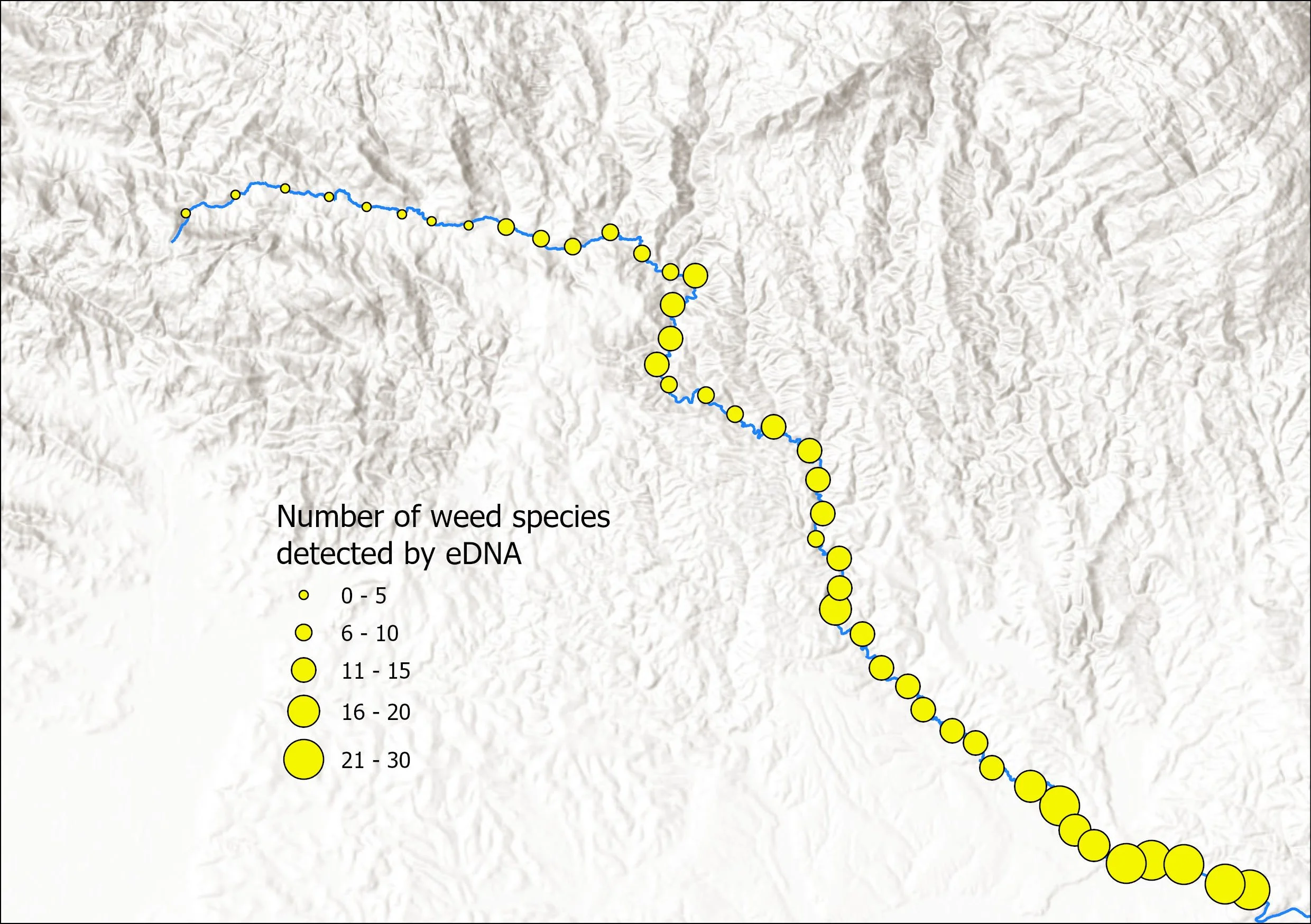
Environmental DNA (eDNA) and metabarcoding are rapidly changing the way ecologists think about biodiversity surveys. Rather than searching directly for plants and animals, these techniques look for traces of genetic material left behind in the environment. A simple water sample can contain DNA from hundreds of species that have interacted with a catchment. We've previously discussed the basics of eDNA metabarcoding and how it can be used to detect biodiversity from environmental samples. One of the more interesting emerging applications is not simply detecting whether a species is present, but using strategic sampling designs to help understand where it occurs across a landscape.
A particularly promising example is the delimitation of invasive weeds along waterways.
Many invasive plants are strongly associated with riparian environments. Species such as willows, blackberry, reed sweet grass and numerous other environmental weeds often establish along creeks and rivers before spreading more broadly into the surrounding landscape. Traditional surveys generally involve walking waterways, conducting visual inspections on foot or with drones, or targeting known infestations. While highly effective, these approaches can become expensive and time-consuming when dealing with long stream networks, inaccessible terrain, or large catchments.
eDNA offers an alternate approach with much less leg work, and improved efficiency. Instead of surveying every kilometre of stream, a series of water samples can be collected at regular intervals throughout a catchment. Each sample is analysed using metabarcoding techniques to identify the plant species whose DNA is present within the water. The resulting dataset can provide a picture of where a target weed begins appearing within the system.
Imagine a creek sampled every few kilometres from its headwaters downstream. If a target weed is consistently absent from upstream samples but begins appearing in downstream samples, the transition zone may indicate the approximate location of an infestation. Rather than searching an entire catchment, field crews can focus investigations on a much smaller section of stream.
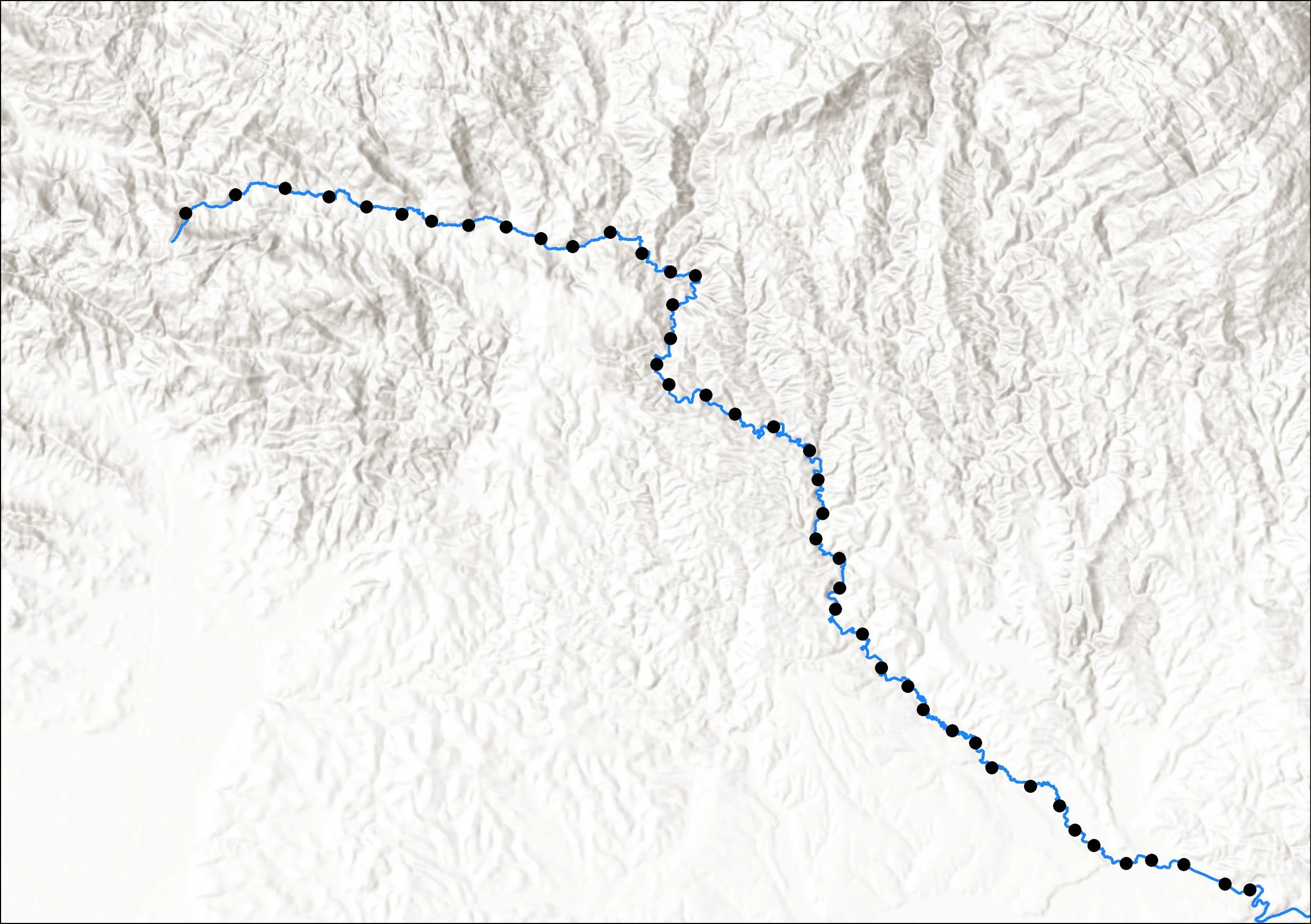
Sample points along a river.
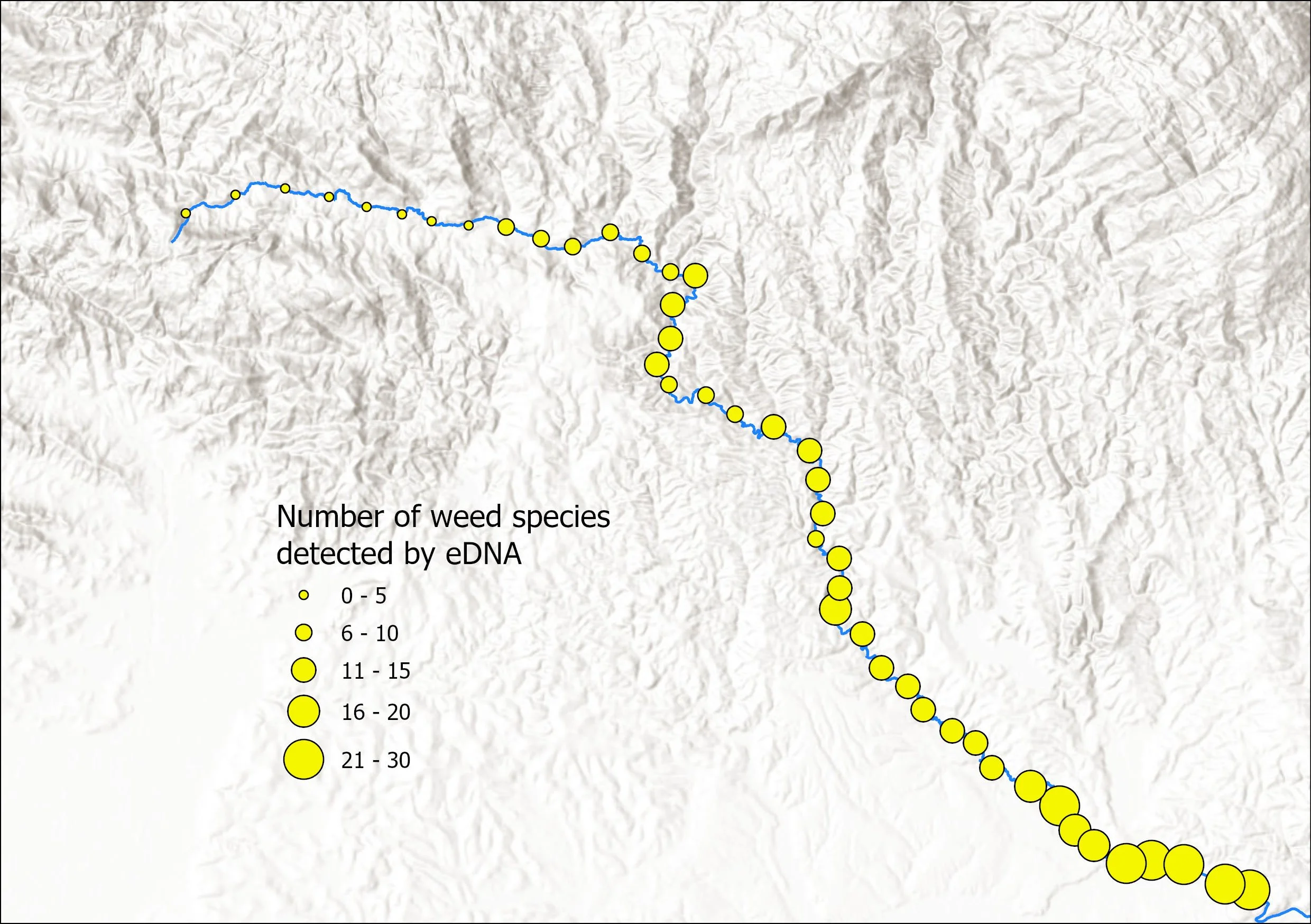
Number of weed species detected by eDNA.
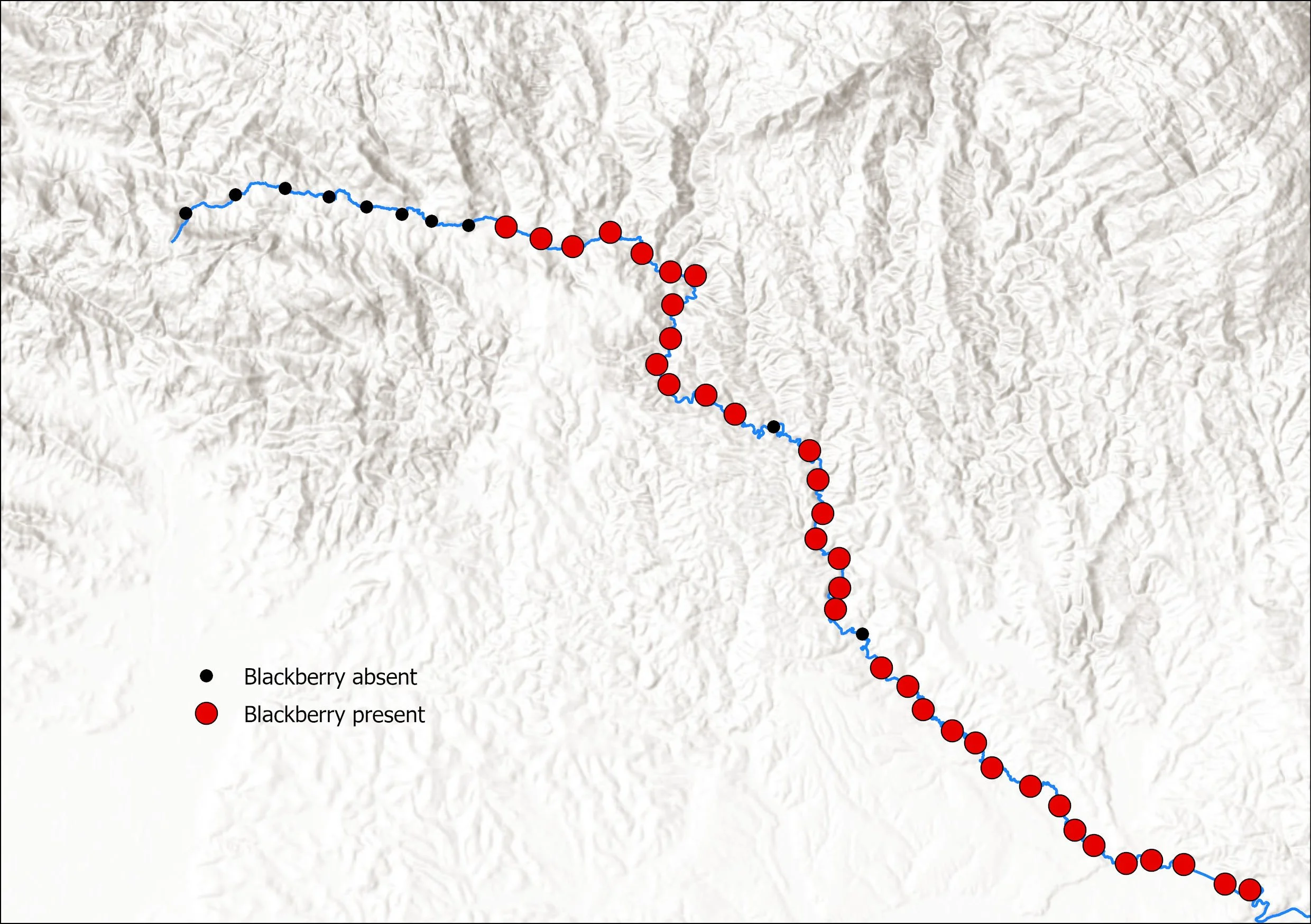
Occurrence of Blackberry along the river as determined by eDNA.
This approach effectively uses waterways as natural collectors of biological information. Water integrates DNA from the surrounding environment and transports it downstream, potentially allowing surveyors to detect species that may not be immediately visible from the sampling location itself.
The greatest value of this approach may not be replacing traditional surveys, but directing them. For example, land managers responsible for hundreds of kilometres of waterways often need to identify new incursions before they become widespread. Systematic eDNA sampling could help prioritise where on-ground inspections should occur first. The same concept could be applied to eradication programs. Following weed control works, repeat sampling may help identify whether a species continues to be detected within a catchment and where further investigations should be concentrated.
As metabarcoding can detect many plant species simultaneously, the information obtained from a single sampling campaign may extend well beyond the original target weed. A catchment-scale survey could potentially provide insights into multiple invasive species, as well as the broader plant community present within the system.
Limitations
As exciting as these applications are, there are important limitations that must be considered. One of the biggest challenges is determining exactly where detected DNA originated - Water moves. DNA moves with it.
A positive detection at one location does not necessarily mean the target species is growing immediately upstream of the sampling site. DNA may have travelled some distance before being collected. Environmental conditions such as flow rates, temperature, sunlight exposure, sediment loads and microbial activity all influence how long DNA persists and how far it may be transported. This issue is particularly relevant for plants.
Researchers from the Arthur Rylah Institute have been investigating the use of eDNA for invasive species detection, including willows. One of the questions raised during this work is whether willow DNA detected within a stream always reflects the presence of willow plants upstream, or whether pollen, seeds or other sources of contamination may produce detections even where no upstream infestation exists. The answer is still being explored and highlights the importance of interpreting eDNA results carefully.
False positives and false negatives also remain important considerations. Species may occasionally be detected when they are not present nearby, while low-density populations may sometimes escape detection altogether. Survey design, replication, laboratory protocols and quality assurance processes all play critical roles in reducing these risks. For these reasons, eDNA should generally be viewed as a complement to conventional ecological surveys rather than a complete replacement.
Despite these limitations, systematic eDNA sampling has enormous potential as a screening and prioritisation tool. When used appropriately, it can rapidly narrow large search areas, identify sections of catchment that warrant closer investigation, and provide early indications of emerging infestations that might otherwise remain undetected.
For land managers faced with extensive stream networks and limited survey budgets, this capability is particularly attractive. Rather than asking ecologists to search everywhere, eDNA can help answer a more practical question: where should we look first?
For organisations exploring innovative approaches to biodiversity monitoring, invasive species management or ecological assessment, eDNA is rapidly moving from an experimental research tool to a practical component of the ecological survey toolbox.